- Sue needed money to keep her vital medical equipment, but banks weren’t an option as she was on benefits. She turned to a loan shark and was left in debt and with constant anxiety.
- Sofia borrowed £3,000 for Visa fees and ended up paying over £5,000 just in interest. She was terrified of the effect on her immigration status.
- Andrew borrowed to cover an unexpected bill for £400 – he ended up losing his job, his belongings and his sense of safety.
- Michelle would sit in the dark with her child, terrified in her own home as a loan shark called to collect money.
- Steve felt he was treated like a ‘cash cow’ from a neighbour he once thought of as a trusted friend.
- Suni borrowed for emergencies but paid back double and had to use jewellery as security.
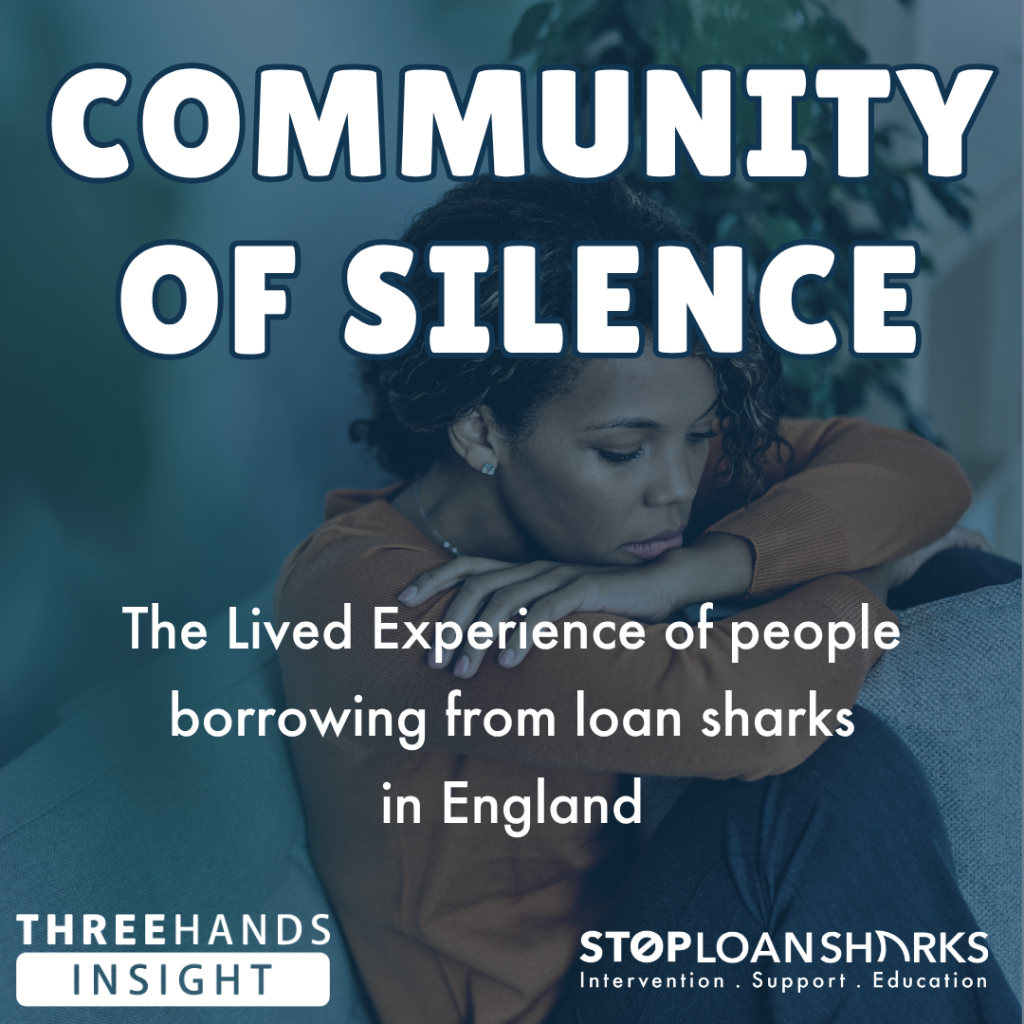
These are the everyday stories of how people can find themselves isolated, distraught and trapped in a ‘community of silence’ after borrowing from loan sharks.
Their stories are highlighted in a new report released today (JUNE 1 2026) by the England Illegal Money Lending Team (IMLT) and which warns that people are being forced into borrowing through ‘crisis, not choice’ and then being left too ashamed or frightened to speak out.
The IMLT spoke to a number of borrowers who have not accessed support or reported a loan shark in order to examine the reasons why that was the case.
Dave Benbow, head of the IMLT, said: “We know there are over a million people in England borrowing from illegal lenders. These are the people we know about, but this is a hugely under-reported crime.
“We wanted to hear from those who haven’t reported it – to understand why, and what might have helped them come forward. What we found gives us vital insight and shows how we must change to reach people who need us most.”
The report was produced in partnership with Three Hands Insight (www.threehandsinsight.co.uk). Three Hands sourced a number of participants who had lived experience of dealing with a loan shark and who were willing to share their stories anonymously for the report.
Mr Benbow said: “It is notoriously difficult for those who have borrowed from illegal lenders to talk publicly about their experiences. There is so much shame, embarrassment and fear around the situation that they don’t feel safe to do so. This project meant people could speak freely and confidentially to help us understand some of the reasons they borrowed and why they hadn’t reported the lender.”
The report identified a pattern of people borrowing from illegal lenders at moments of crisis, including sudden bills or emergencies, costs related to immigration or disability, and shortfalls in income.
Many had already tried banks, credit cards, credit unions and family, but were turned away or felt these options were not available to them.
Instead, they were introduced to lenders through trusted networks – friends, neighbours, pubs, or community contacts – with the familiarity creating an illusion of safety.
Mr Benbow said: “The people we spoke to felt they could trust these lenders as they were known in their communities. And they often felt like they were the only option.
“Borrowers also focused on whether they could afford the immediate weekly payment amount – they did not look at the overall long-term cost or discuss interest rates. Some said they would have agreed to repay anything; what was important to them in that moment was that they had the money to get through the immediate crisis in hand. They were borrowing through crisis, not choice.”
In all the cases, what appeared to be a lifeline spiralled into exploitation, with debts escalating. In some cases, personal items were taken and borrowers were threatened or intimidated.
Some reported losing jobs and housing or suffering long-term mental health issues as a result of borrowing.
The cases included:
- Sue, a former senior professional who felt she had no choice but to borrow from a loan shark after facing veterinary bills for her assistance dog and insurance costs for her disability equipment.
- Sofia, who borrowed £3,000 to cover visa costs. She ended up paying more than £5,000 in interest alone – while the original debt remained. The lender later seized her jewellery and threatened to contact her husband’s employer.
- Andrew, who borrowed when he was struggling with bills and was then publicly humiliated by a lender in a local pub and eventually lost his job after the harassment escalated.
- Michelle, a single mother who described hiding in her own home with her child, too afraid to answer the door as a lender repeatedly turned up demanding money.
- Steve, who spoke of being groomed by an apparently friendly neighbour and had to eventually leave his home to rebuild his life.
- Suni, who turned to borrowing within her community when she had nowhere else to go. She borrowed small amounts for essentials – an emergency flight, a fridge. The loans were repaid quickly, in cash, often from her benefits but she paid back double what she borrowed and risked losing jewellery used as security.
Mr Benbow said: “Some of the borrowers faced threats and intimidation, but there did not appear to be any physical violence. This shows how illegal lenders manipulate and control people through implied threats and coercion. The thought of what might happen is often a more powerful method of control.”
A key finding of the report is outlining the reasons that borrowers may not seek help. They included fear of being judged or blamed; worry about consequences involving police, immigration, employers or landlords; shame about debt, a belief that reporting will make things worse and concern about losing their only access to credit.
Many participants said they saw all official services simply as “authorities” and did not distinguish between support and enforcement.
Mr Benbow said the report highlighted a need to move away from enforcement-led messaging and towards support and early intervention to encourage people to engage with the IMLT before the situation reached crisis-point. It also found that more use should be made of trusted community spaces such as food banks, faith groups and local centres to reach people.
He added: “We are already taking steps in some of these areas, such as our We Will Help You Make The Call scheme, where local community partners across England agree to use their offices as a Stop Loan Sharks Access Point, for those who have need to seek support in person.
“We are taking on board all the other recommendations and insights that this report has highlighted to drive our approach to awareness-raising and support work within communities.
“At the heart of the report is a clear message – borrowers are not to blame. However, threats and intimidation, fear and embarrassment mean people are living in a community of silence. But support is available and we would urge anyone who is worried about illegal lending to contact us. All calls are treated in complete confidence, and we are here to help, not to judge.”
Michael Hilton, director of Three Hands Insight, added: “I was blown away by how honest and open the lived experts were prepared to be in our conversations, with many sharing their deeply personal experiences for the very first time. The stories were all different but what is clear is that people are turning to illegal money lending because they have nowhere else to turn and then they often have to face the consequences alone.
“The lived experts have placed their trust in us by sharing their stories and we now hope the recommendations in this report can be taken forward to give others facing these challenges the alternative options and support they need.”
The IMLT, known as Stop Loan Sharks, is a national body funded via Treasury, set up to investigate and prosecute illegal lenders and support borrowers.
It is hosted by Birmingham City Council but works with local authorities across the country to support those who have been affected by illegal lending.
To read the report click here
Anyone who has been affected by illegal money lending should call the Stop Loan Sharks 24/7 helpline on 0300 555 2222 or access support online at www.stoploansharks.co.uk. There is a Live Chat facility on the website and the team can also be contacted via WhatsApp on 07700 102773. The Live Chat and WhatsApp services are monitored from 9am to 8pm, Monday to Friday.