Economic abuse can take many forms. It might involve controlling someone’s access to money, taking out credit in their name, pressuring them into borrowing or deliberately leaving them without enough money to meet their basic needs.
Sometimes, illegal lending or loan sharks can be involved in that situation.
Loan sharks thrive on fear, dependency and exploitation, and they may use debt as a way of maintaining control over someone’s finances.
What is economic abuse?
Economic abuse happens when someone restricts, exploits or controls another person’s money or economic resources.
One particularly damaging form is coerced debt, where somebody is forced or pressured into taking on borrowing they do not want or cannot afford.
This might include:
- being pressured into taking out loans or credit
- having debts taken out in their name without their knowledge
- being made responsible for somebody else’s financial commitments
- having wages, benefits or other income controlled
- being deliberately deprived of money so they feel they have no choice but to borrow to pay for essentials
The impact can continue long after the original debt was incurred.
Unmanageable repayments and damaged finances can make it harder for someone to afford everyday essentials, secure somewhere safe to live or rebuild their financial independence.
Debt can therefore become another way of maintaining control.
When a loan becomes a form of control
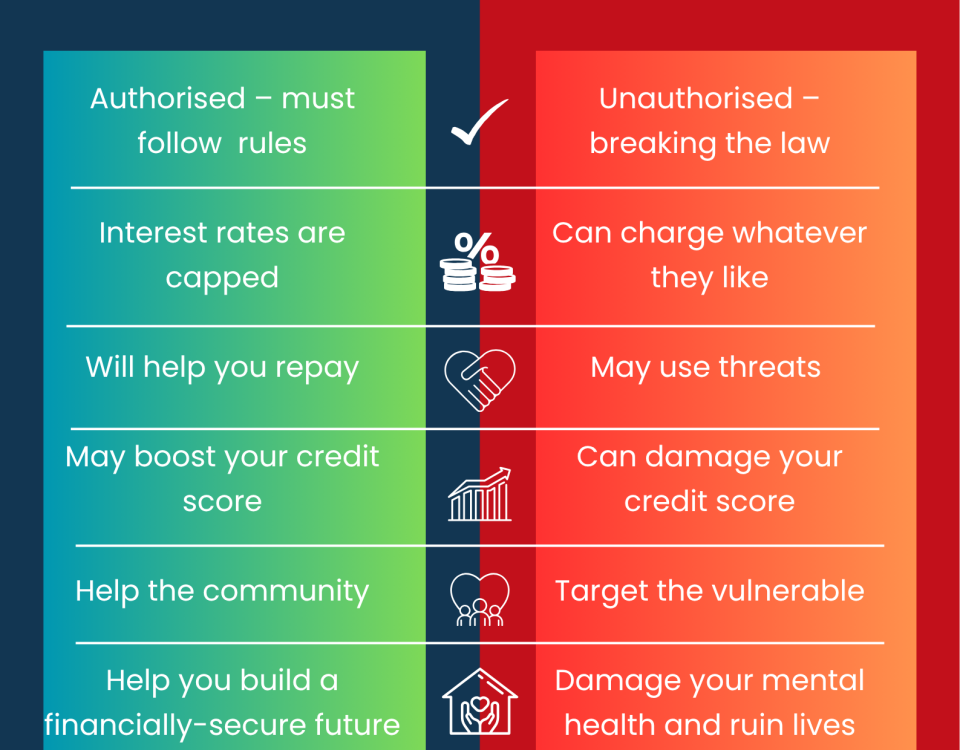
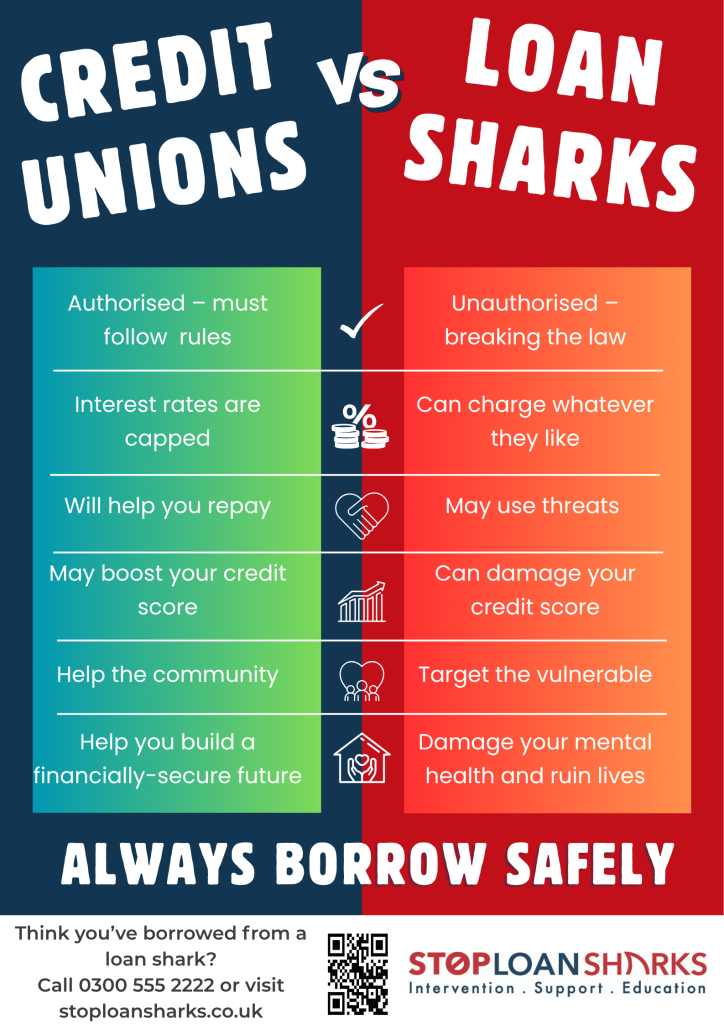
A loan shark is someone who lends money without the proper authorisation from the Financial Conduct Authority (FCA) – that means they don’t have to follow the rules that exist to protect borrowers.
They rarely look like the stereotype people might expect. A loan shark could be a neighbour, friend, colleague, acquaintance or somebody already known and trusted within the community.
At first, they may appear helpful, offering money quickly when somebody is struggling financially. But what seems like a helping hand can soon change.
There may be no paperwork, no clear repayment schedule and no certainty about how much is actually owed. Interest or charges may increase without warning, leaving the borrower trapped in a cycle of repayments.
Some illegal lenders may take bank cards, passports or personal possessions. Others may attempt to control a borrower’s finances or use threats, humiliation, harassment or violence to make sure repayments are prioritised above rent, food, energy bills and other essential spending.
This is where illegal lending and economic abuse can overlap.
Money and debt become tools of control.
Someone may be:
- pressured or coerced into borrowing by a partner, relative or another person
- made financially dependent, leaving borrowing seemingly their only way to pay for essentials
- forced to take responsibility for debts that are not really theirs
- pressured into handing over wages, benefits or other income
- frightened by threats or intimidation connected with repayments
- unable to seek help because they fear the lender, the person controlling them, or both.
Seen in this context, illegal lending is not simply a financial problem. It can involve exploitation, coercion and control.
Would you recognise the warning signs?
Someone affected by a loan shark may not tell you directly what is happening.
Fear, shame and intimidation can make speaking out incredibly difficult. They may not even identify themselves as a borrower. They may simply believe they owe somebody money and have to keep paying.
That makes it particularly important for professionals working in safeguarding, housing, health, social care, policing and community services to look beyond what is immediately visible.
Sometimes, one thoughtful question from a frontline worker can begin to uncover the control an illegal lender has over someone’s life.
Warning signs could include:
- someone not knowing how much they borrowed or how much they still owe
- repayments or interest continually increasing
- a bank card, passport, benefits card or valuables being held by somebody else
- someone else controlling access to the person’s bank account, wages or benefits
- unexplained loans, credit agreements or bills appearing in someone’s name
- frequent calls, messages or visits demanding payment
- threats, intimidation, harassment or violence
- somebody appearing frightened or secretive when asked about money or debt
- someone having little or no money for essentials despite receiving an income
Individually, these signs do not necessarily mean illegal lending is taking place. But they may provide a reason to ask further questions and offer support.
What should you do if you are concerned?
When somebody has already experienced coercion or control, the response should not take even more control away from them.
Listening without judgement or blame is an important first step.
Ask what has happened. Find out what the person wants to happen next. Explain their options clearly and support them to make choices that feel safe.
It may take time before somebody feels ready to talk about what they are experiencing. Simply being heard, believed and reassured that they are not to blame can make a huge difference.
And remember – a borrower has not committed a crime by borrowing from an illegal lender. It is the loan shark who is breaking the law.
If you are supporting somebody who may be experiencing economic abuse or illegal lending, consider their immediate safety as well as their financial circumstances.
If somebody is in immediate danger or a crime is in progress, call 999.
If illegal lending is involved, the England Illegal Money Lending Team, also known as Stop Loan Sharks, provides free, confidential and non-judgemental support to those affected.
Borrowers can be referred to Stop Loan Sharks for specialist help and support – or you can contact the team on behalf of someone you are worried about.
Helping someone escape financial exploitation helps them regain their voice, their choices and their control.